

Connecticut Bass Tournament Season Heats Up This August
July 30, 2026
Maine Boat & Home Show Returns to Rockland Waterfront August 7
August 5, 2026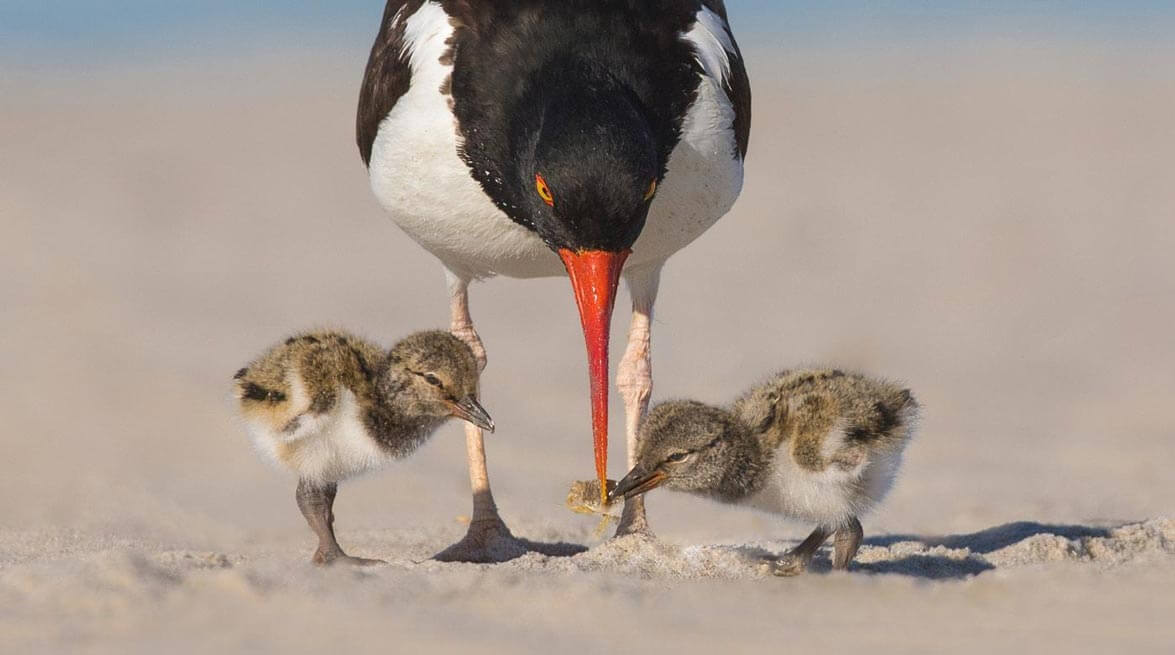
American oystercatcher feeding its four chicks on a sandy beach, showcasing parental care and natural coastal wildlife behavior.
American Oystercatchers Make a Comeback Along New England’s Coast
With their black-and-white plumage and bright orange bills, American oystercatchers are once again becoming a more familiar sight along New England’s shoreline.
The birds were largely eliminated from the region by the early 20th century because of hunting and egg collecting. Their gradual return has been supported by efforts to protect nesting areas, reduce disturbances and monitor young birds.
Recent work at Trustom Pond National Wildlife Refuge in Rhode Island included banding young oystercatchers so researchers can track their movements, survival and future nesting activity.
Across the Atlantic and Gulf coasts, the American oystercatcher population increased by approximately 45 percent between 2008 and 2023—an encouraging trend while many other shorebird populations continue to decline.
Oystercatchers nest directly on beaches, shell banks and salt-marsh islands, where their eggs and chicks are vulnerable to flooding, predators, vehicles, unleashed dogs and beachgoers who may unknowingly approach too closely.
Conservation teams protect nests with fencing and signs while educating visitors about the importance of giving the birds space.
Visitors can help by respecting marked nesting areas, keeping dogs leashed and observing shorebirds from a distance. The oystercatcher’s return shows that coordinated conservation efforts can make a meaningful difference along New England’s coast.
