New England Cleanup Removes 1,000 Tons of Ghost Fishing Gear
November 12, 2026

New Menhaden Limits Divide Fishermen and Conservationists
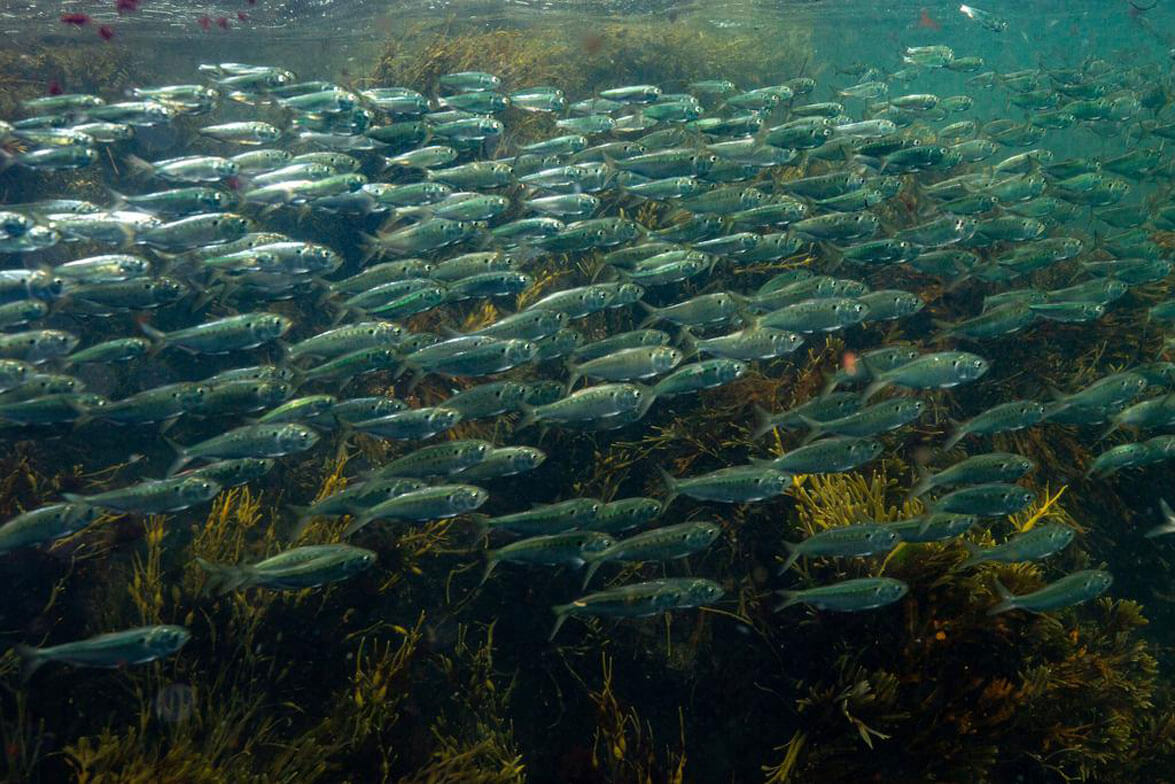
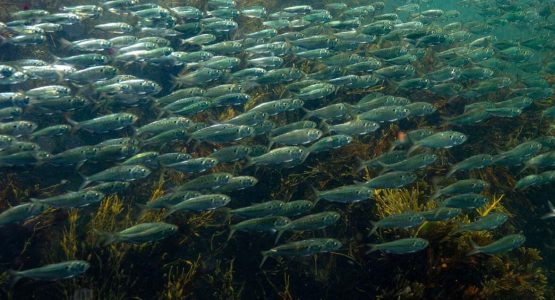
Menhaden form large schools in the Atlantic Ocean and bay areas. Photo/NOAA Fisheries.
On November 10 and 11, 2026, the Atlantic States Marine Fisheries Commission (ASMFC) Atlantic Menhaden Management Board approved phased catch reductions for Atlantic menhaden during its 84th annual meeting in Newport, Rhode Island—and few stakeholders seem thrilled with the decision. The Commission is tasked with coordinating the conservation and sustainable management of 27 shared marine, shell, and diadromous fish species across the 15 U.S. Atlantic coastal states.
Ruling on the forage fish—known in New England as pogies or bunker—the Board adopted a compromise motion introduced by Maine (Megan Ware) setting the coastwide total allowable catch (TAC) at 170,000 metric tons in 2027 and 155,000 metric tons in 2028. This represents a ~9% cut from the 2026 TAC of 186,840 mt, a 17% cumulative reduction from 2026 by 2028, and a 34% reduction from the 2025 TAC (233,550 mt).
Commissioners also approved Addendum II to Amendment 3, linking the Bay Cap to 21.8% of the coastwide TAC (with a maximum ceiling of 51,000 mt). Under the approved TACs, the cap drops from 51,000 mt to 37,123 mt in 2027 and 33,847 mt in 2028.
Called “the most important fish in the sea,” filter-feeding menhaden curb algae while nourishing striped bass, bluefin tuna, whales, and ospreys as New England herring stocks remain depleted. ASMFC projections show a 0% probability of overfishing in 2027 and 2028, though fishing mortality (F) has a high probability of exceeding the Ecological Reference Point (ERP) target. Updated technical projections indicated a ~39%–40% reduction was needed for a 50% chance of meeting that ecological target. Board Chair Joe Cimino noted the cuts balance ecology with coastal livelihoods, backed by research funding and three-year Bay Cap reviews.
Conservation, recreational groups and commercial advocates had mixed reactions. Chesapeake Bay Foundation, Theodore Roosevelt Conservation Partnership, and American Bird Conservancy, for example, welcomed the proportional Bay Cap linkage as vital for starving ospreys and declining striped bass. However, they warned that the modest coastwide cuts fall short of what scientific models indicate is needed for predators, and noted that the 2027 quota still exceeds actual 2025 landings—delaying meaningful relief.
Forage Fish Campaign Executive Director Whit Fosburgh criticized favoring industrial reduction over wildlife and local economies. “It’s simple: Omega Protein wins again, while striped bass, bluefish, tuna, ospreys, whales, fishermen, and coastal economies lose,” Fosburgh said. “Meaningful reductions in industrial harvest are the minimum first step. Ultimately, we must end industrial forage fishing in U.S. waters before the damage becomes irreversible.”
Conversely, commercial advocates—including the American Small Pelagics Network, Omega Protein, and Ocean Harvesters—warned of economic fallout. Noting menhaden are not overfished, bait harvesters and lobster representatives cautioned tighter quotas will spike bait prices and threaten crews, processors, and waterfronts from Virginia to Maine.
In Maine, quotas fall to 17.8 million pounds in 2027 and 16.2 million pounds in 2028. While the Maine Lobstermen’s Association and New England Fishermen’s Stewardship Association were relieved deeper cuts failed, the American Saltwater Guides Association and Maine Audubon warned the quotas threaten striped bass and fishing charters.
The 2027 coastwide quota takes effect January 1, 2027, followed by the Bay Cap on May 1, 2027.

We offer the latest boat releases, electronics, gear, and dock-and-dine experiences. Engage yourself with captivating TV shows and short videos, immersing you in New England’s maritime adventures.
REGIONAL NEWS