Spooky Surprise: Rare Calico Lobster Caught in MA
November 2, 2026

Citizen Scientists Help Track New England's Sturgeon Comeback

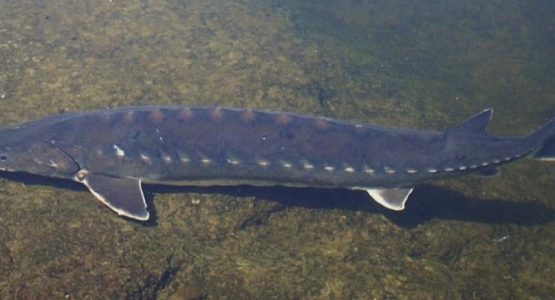
Shortnose Sturgeon, photo/Micah Kieffer, USGS
Conservation efforts for prehistoric marine life are celebrating a wave of success across the state of Maine, along with other New England States. The Maine Department of Marine Resources (DMR), in close partnership with Maine Sea Grant, recently launched an optimistic public education campaign to support the ongoing recovery of threatened Atlantic and endangered shortnose sturgeon, according to an official announcement from the Maine DMR.
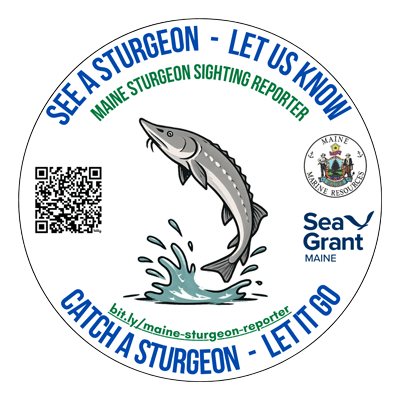 Backed by a $10,000 Species Recovery Grant from the National Oceanic and Atmospheric Administration (NOAA), this timely initiative installs educational signs and stickers at popular boat ramps along Saco Bay and the Androscoggin River to promote safe catch-and-release handling practices. The highly collaborative campaign empowers community members to actively participate in wildlife conservation by reporting sightings of these ancient, charismatic species.
Central to this local success is the user-friendly Maine Sturgeon Sighting Reporter, which allows citizens to digitally map live observations or accidental catches. Originally rolled out by the state back in 2025, the digital interactive online portal has already successfully gathered over 120 critical public submissions, according to comprehensive coverage by WABI-TV. These community-driven reports allow marine biologists to accurately map out exactly when and where sturgeon utilize local rivers and estuaries, which directly guides the ongoing expansion of regional acoustic receiver tracking networks.
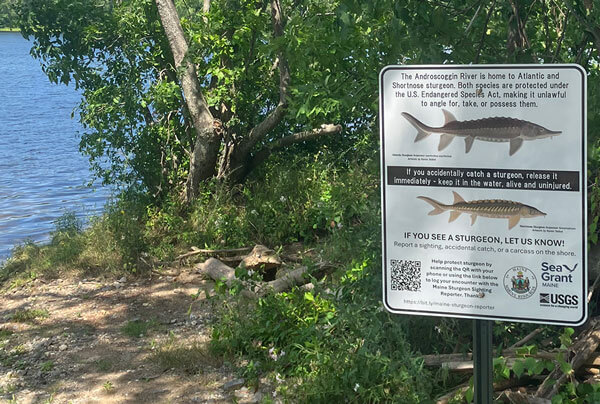
Sturgeon signage at Pinettes Landing, Androscoggin River in Brunswick. Photo/ME Dept. of Marine Resources.
The profound value of this community science was vividly demonstrated on September 6, 2026. As documented on the official Maine DMR Facebook Page, an alert local resident used a drone to capture spectacular footage of numerous sturgeon loosely schooled near the mouth of the Spurwink River. Some of the observed fish were estimated to exceed eight feet in length. State biologists noted that while sturgeon usually swim alone, such extraordinary loose gatherings indicate positive seasonal behaviors like staging before feeding cycles.
Sean Ledwin, Director of the DMR Sea Run Fisheries and Habitat Bureau, has expressed great enthusiasm for the public’s increasing involvement, emphasizing that any citizen observation can dramatically improve scientific understanding of the species while offering everyone a direct role in environmental restoration.
While Maine is currently celebrating its improving sturgeon outlook, this resurgence also extends beyond Maine’s borders. Recent environmental DNA (eDNA) monitoring by the Connecticut River Conservancy validated long-rumored, anecdotal citizen sightings further upstream, providing the first hard scientific evidence of shortnose sturgeon swimming in the northern reaches of the Connecticut River along the New Hampshire and Vermont borders. Meanwhile, comprehensive data compiled by the Connecticut Department of Energy and Environmental Protection highlights a dramatic population surge further south. Historical modeling in the lower Connecticut River previously estimated local populations at roughly 1,500 fish, but recent tracking shows the regional population has expanded to an impressive 10,000 to 12,000 sturgeon migrating safely from Hartford down into the Long Island Sound.
Anecdotally, commercial fishermen working in Rhode Island waters around Block Island have also reported increasing encounters with the huge, prehistoric fish.

We offer the latest boat releases, electronics, gear, and dock-and-dine experiences. Engage yourself with captivating TV shows and short videos, immersing you in New England’s maritime adventures.
REGIONAL NEWS

Citizen Scientists Help Track New England’s Sturgeon Comeback
Spooky Surprise: Rare Calico Lobster Caught in MA
Are Offshore Wind Farms Delaying Coast Guard Rescues?
Scientists Track Speedy Atlantic Bonito in New Study
Arctic Water Pulse Costs Squid Fleet $6.5 Million
Tautog Bag Limit Jumps to 5 Fish in MA and RI October 15
7-Year Maritime Mystery: Wreck Found Near Wind Turbine
31 Whales Entangled Off East Coast in 2026, Most in New England
1,116-Pound Bluefin Tuna Shatters NH Record

Menhaden Shortage Threatens New England Ospreys

The Toll of the September Nor’easter
Hidden Compartment Leads to Illegal Striper Bust on Cape Cod